Health and Safety Policy for Carpet Cleaners Dulwich
 This health and safety policy sets out the standards followed by carpet cleaners in Dulwich to protect employees, customers, visitors, and anyone affected by cleaning operations. It applies to every stage of work, from preparation and transport to cleaning, drying, and post-service checks. The policy is designed to reduce risk, support safe working habits, and ensure that all carpet cleaning services are carried out in a controlled and responsible manner. Safety is treated as a core part of service quality.
All staff are expected to follow workplace procedures, use equipment correctly, and report hazards promptly. Every cleaning task must be assessed before work begins so that suitable controls can be applied. This includes checking the condition of the flooring, identifying slip risks, reviewing access routes, and confirming whether special care is needed around electrical fittings, fragile furnishings, or vulnerable occupants. Preventing injury and damage is always a priority.
 The company recognises that carpet cleaning may involve water, detergents, heat, electrical equipment, lifting, and movement in occupied properties. Because of this, every carpet cleaning operative must understand the safe use of tools and chemicals and must work in a way that protects both themselves and others. The policy also applies to temporary staff, subcontractors, and supervisors, who are all expected to meet the same standards of care.
Responsibilities and Safe Working Practices
Managers are responsible for ensuring that suitable procedures, training, and supervision are in place. They must provide equipment that is maintained in good condition, along with clear instructions for safe use. Staff are responsible for following those instructions, keeping work areas tidy, and stopping work if an unsafe condition develops. Everyone shares responsibility for safe practice.
Before any carpet cleaning service begins, operatives should inspect the area and carry out a basic risk assessment. Particular attention should be paid to wet floors, trailing cables, unstable furniture, poor lighting, and the presence of children, pets, or elderly residents. If necessary, warning signs should be used and access restricted until surfaces are safe. Where furniture has to be moved, it should be done carefully and only when it can be completed without strain or damage.
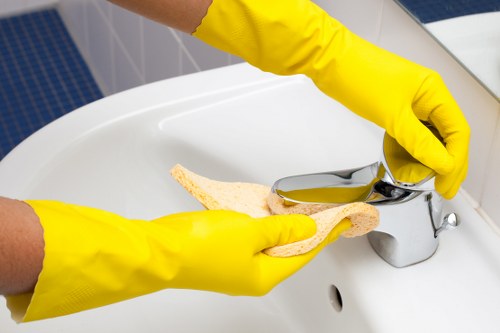 Chemical safety is essential in professional carpet cleaning. Only approved products should be used, and all cleaning agents must be stored, labelled, and diluted according to manufacturer instructions. Staff should wear appropriate personal protective equipment when required, including gloves, eye protection, or suitable footwear. Any spill must be cleaned immediately using safe methods, and any adverse reaction to a product must be reported without delay. Never mix cleaning chemicals unless the instructions specifically permit it.
Equipment, Training, and Hygiene Controls
All cleaning machines, hoses, and accessories must be checked before use and taken out of service if defects are found. Electrical equipment should be visually inspected for damage and used only in dry, suitable conditions. Where extension leads are necessary, they must be positioned to avoid trips, crush damage, or contact with moisture. Regular maintenance records help ensure that carpet cleaning equipment remains safe and reliable.
Training is provided so that staff can perform work safely and confidently. This includes manual handling, correct lifting techniques, safe application of cleaning solutions, emergency procedures, and the recognition of hazards in occupied premises. Workers must not carry out tasks beyond their level of competence. Supervisors may reassign duties if a task cannot be completed safely under current conditions.
Hygiene controls are also part of the policy. Hands should be washed after handling chemicals, waste, or contaminated materials. Food, drink, and smoking are not permitted during cleaning operations. Protective clothing should be kept clean, and contaminated materials should be disposed of appropriately. Where work is carried out in homes or commercial spaces, the team should respect the environment and avoid unnecessary disruption.
Incident Reporting and Emergency Response
Any accident, near miss, spill, or equipment failure must be reported as soon as possible. Prompt reporting helps prevent repeat incidents and supports effective review of working methods. Records should include the date, location, nature of the incident, and any action taken. If a customer or member of the public is affected, assistance should be provided immediately and the situation escalated in line with company procedure.
Emergency readiness is important for every carpet cleaning company. Staff should know how to respond to a fire alarm, electric shock, chemical exposure, injury, or flood. First aid arrangements must be available where required, and emergency exits should never be blocked by equipment or materials. In the event of a serious hazard, the work area must be made safe and operations paused until the issue is resolved.
 The policy is reviewed regularly to ensure that it remains effective, up to date, and aligned with current best practice. Feedback from inspections, incident reports, and staff observations is used to improve procedures. When improvements are identified, they are implemented promptly so that standards remain high. A safe working culture depends on continuous attention and practical action rather than occasional review alone.
Commitment to Ongoing Safety
 This policy applies to all carpet cleaners Dulwich operations and should be followed at every job. Whether the work involves domestic rooms, hallways, stairs, or larger premises, the aim is always the same: to complete the service efficiently while protecting people and property. By following these rules, the business supports a safer environment and delivers professional results with care and responsibility.
Key Safety Principles
- Assess risks before starting work.
- Use cleaning products and equipment exactly as instructed.
- Keep floors, cables, and access routes clear.
- Wear suitable protective equipment when needed.
- Report hazards, damage, and incidents immediately.
- Maintain training, supervision, and equipment checks.